Complete Guide To Bachata: History, Styles, Music and Dance
What Is Bachata?
Bachata is a music genre and social dance from the Dominican Republic that has become one of the world’s most popular Latin dances. Emerging in the early 1960s, it’s known for romantic music, strong partner connection, and expressive body movement. Originally a guitar-based Dominican style with emotional lyrics about love and heartbreak, bachata evolved from a simple four-step dance into multiple styles, including Dominican, Modern, and Sensual Bachata by the 1990s and beyond. Today, bachata is more than just a dance — it’s a global community connected through music, festivals, social dancing, travel, and shared passion.
The Roots Of Bachata Music
To understand bachata dance, it helps to first understand bachata music. The dance grew directly from the music’s rhythm, instruments, and emotional feeling. Bachata began in the Dominican Republic in the early 1960s as a guitar-based style connected to everyday life, love, heartbreak, and longing. Early bachata — once called amargue (“bitterness”) — was considered low-class, but its honest emotions and relatable stories made it deeply popular. Over the 1970s and 1980s, bachata evolved from simple acoustic music into a worldwide phenomenon. Its steady rhythm, emotional melodies, and recognizable groove shaped the dance itself: close partner connection, smooth movement, hip motion, and musical interpretation. Today, bachata music and dance continue to evolve together, connecting people around the world through emotion, rhythm, and social dancing.
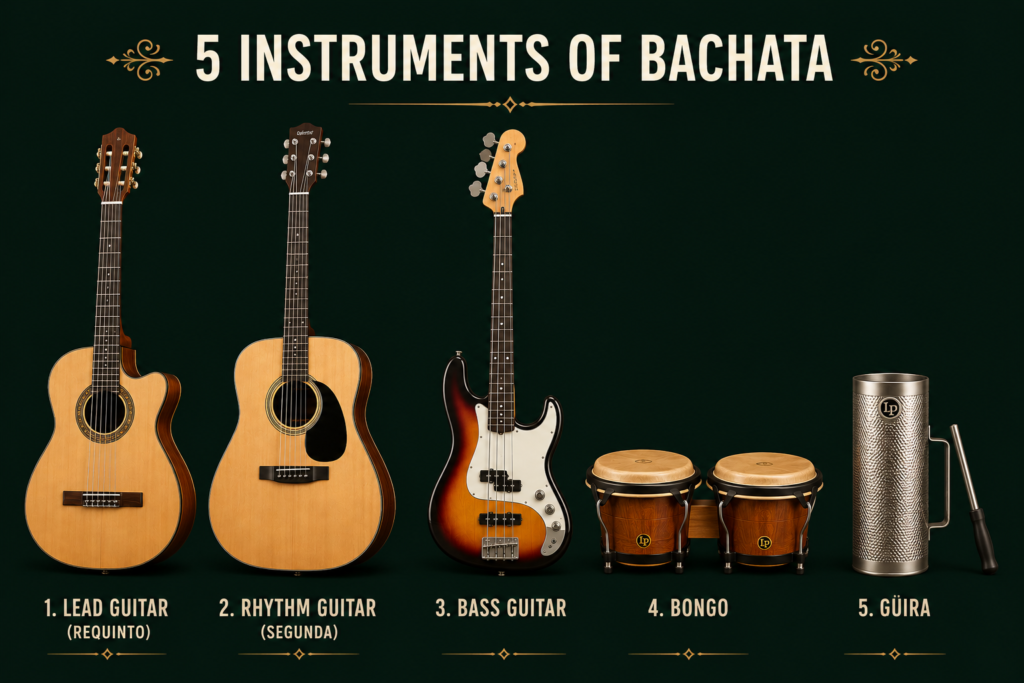
Key Instruments in Bachata
Lead guitar (requinto)
Listen for catchy melodies, intros, and emotional riffs. This is the “voice” of bachata and often guides musicality, body waves, styling, dips, and expressive movements.
Rhythm guitar (segunda)
Plays steady syncopated strumming patterns that create the smooth bachata groove. Dancers use it to follow timing, flow, hip movement, and partner connection.
Bass Guitar
Provides the deep pulse and rhythmic foundation of the music. It helps dancers feel the beat, timing, weight changes, and grounded movement.
Bongos
Add sharp accents, fills, and energy changes, especially during transitions and mambo sections. Dancers often respond with footwork, syncopations, taps, and faster movements.
Güira
Creates the constant scraping “shhh-shhh” sound that keeps the rhythm clear and consistent. It helps dancers maintain groove, timing, and smooth continuous movement.
The Evolution Of Bachata Dance
Bachata dance developed naturally in the Dominican Republic in the early 1960s as people began dancing socially to bachata music. Early bachata was simple, grounded, and focused on connection, rhythm, and feeling rather than complex technique. As bachata spread internationally from the 1990s onward, dancers and teachers added influences from other partner dances, creating different modern styles.
How Bachata Became a Dance
At first, bachata was simply music played at gatherings and bars in the 1960s and 1970s. Couples naturally began stepping and swaying to the rhythm, creating a relaxed social dance focused on musical feeling and partner connection. Over time, bachata absorbed movements and ideas from other dances: – Bolero → close connection and romantic feeling – Merengue → simple rhythm and side-to-side movement – Salsa → turns, partnerwork, and combinations – Ballroom → cleaner lines and structured teaching – Zouk → body waves, flow, and head movement – Tango → dramatic pauses, control, and expression
The Shift in Basic Step
The classic bachata basic is a side-to-side four-step pattern with a tap and hip accent on counts 4 and 8, established by the 1980s. As the dance evolved globally especially in the 2000s, Modern and Sensual Bachata introduced smoother movement, body isolations, waves, and more dynamic musical interpretation.
Globalization and Key Turning Points
Bachata became global through successful artists, international festivals, social dancing, and online dance education, particularly from the 2000s to today. What started as a local Dominican dance in the 1960s is now one of the world’s most popular partner dances, connecting people through music, travel, and community.
Foundational Bachata Styles
As bachata spread, three foundational Bachata styles emerged that most dancers recognize today: – Dominican Bachata – Modern Bachata (Bachata Moderna) – Sensual Bachata Each style interprets the same music differently, with its own movement vocabulary, aesthetics, and typical songs. Understanding these styles helps dancers choose how they want to express themselves and what techniques to study. Dominican Bachata emphasizes rhythm, footwork, and playful connection to the music. Modern Bachata refines partner work and turn patterns, often aligning with the smoother sound of more contemporary bachata music. Sensual Bachata focuses on body isolations, waves, and a very close, connected style of dancing, often to remixes or more atmospheric tracks. While these categories are useful, in real social dancing the lines are fluid. Many dancers mix elements from several styles in a single song.
Dominican Bachata
Dominican Bachata is the closest to the original social dance from the Dominican Republic. It is: – Highly rhythmic, with steps that closely respond to the güira and bongos. – Rich in footwork, featuring syncopations, taps, and subtle directional changes. – Typically danced with a more upright posture and varying distances between partners. – Dancers often vary the basic step frequently, moving forward and back, in a square, or using rotational patterns rather than sticking to a single side-to-side basic. Musicality—reacting to breaks, accents, and guitar riffs—is a key element. Although Dominican Bachata is a traditional style, many modern couples, such as Alex and Desiree, prefer it over other bachata styles for its authentic rhythm and expressive footwork.
Modern Bachata
Modern Bachata, largely shaped by the duo Ataca & Alemana, gained significant attention worldwide—especially in Europe and North America—after their May 2008 performance went viral (watch this video). This style includes:
– Clear, structured turn patterns influenced by salsa and ballroom. – An emphasis on smoothness, lines, and elegant partner work. – A foundation built on a more consistent side-to-side basic step. Their style pairs perfectly with modern, radio-friendly bachata tracks and fusion songs that blend bachata with pop or R&B. While dancers may incorporate body rolls and simple dips, these elements tend to be more restrained compared to Sensual Bachata.
Sensual Bachata
Sensual Bachata is a relatively recent style of Bachata that was developed by Korke and Judith, known as the pioneers of this expressive dance form. Their invention blended traditional bachata with techniques from Brazilian Zouk, contemporary dance, and other genres. This style: – Focuses on body isolations, waves, and circular head and torso movements. – Highlights a very close connection, especially in the upper body. – Shapes slow, fluid movements by interpreting the music’s melodic lines and breaks. Leaders in Sensual Bachata use clear, controlled body leads instead of force to guide followers through intricate bodywork. The style often pairs with remixed bachata tracks, R&B-infused bachata, or songs with dramatic intensity changes that complement its emotive character.
Bachata Fusion Styles
Fusion styles mix bachata with other partner dances while keeping bachata’s basic rhythm. They help dancers express different music styles, connect with other dance communities, and expand what bachata can look like. Three common fusion styles are Urban Bachata, Bachazouk, and Bachatango.
Urban Bachata
Combines bachata with hip-hop and street dance. Movements are sharp and grounded with body isolations. Music may include rap or electronic beats but keeps bachata rhythm.
Bachazouk
Mixes bachata with Brazilian Zouk. It has smooth, flowing movements like body waves and circular patterns while keeping bachata timing. The dance feels fluid and elastic.
Bachatango
Blends bachata footwork with tango’s sharp lines and poses. Features dramatic moves, elegant posture, and pauses matching the music. More common in shows than social dancing but influences bachata performances.
Signature Styles & Influences In Bachata
Bachata has spread worldwide, with various styles focusing on smooth partner moves, storytelling through dance, and blending bachata with other styles—all taught via workshops, videos, and events.
A fusion of Modern and Sensual Bachata focused on precision, control, and musicality. – Smooth body movement and clean isolations – Clear leading and following techniques – Strong focus on musical interpretation and timing Their tutorials and teaching style are popular worldwide.
A powerful and expressive style that blends social dancing with performance energy. – Dynamic movements with strong expression – Creative partnerwork and stage presence – Deep interpretation of rhythms, accents, and melodies Their style emphasizes emotion, power, and musical storytelling.
A balanced fusion of traditional Dominican roots and modern sensual movement. – Dominican footwork mixed with body movement – Smooth turns, waves, and isolations – Strong use of pauses, syncs, and musical accents Their style focuses on connection, adaptability, and musical flow.
One of the most influential modern bachata styles worldwide. – Clean technique and expressive movement – Strong rhythm, structure, and partner connection – Balanced for both social dancing and performance The best way to understand the style is by watching them dance.
A creative and experimental style focused on individuality and expression. – Mixing bachata with movements from other dances – Playing with timing, texture, and musicality – Encouraging freedom, creativity, and personal style Their approach treats bachata as a flexible language for self-expression.
More Couples to Follow
There are many other famous and highly respected Bachata couples, such as Daniel & Desiree, Marco & Sara, Pablo & Raquel, Daniel & Tom, and many others. Each couple brings their own style, musicality, technique, and interpretation of Bachata.
Why Follow Bachata Artists?
Following dancers you admire is a great way to grow. It gives you inspiration, helps you understand different styles, and develops your own taste in movement and musicality. Your favorite couples may also change as you grow through your dance journey.
Our personal favorite couple is Gero & Migle. We love their musicality, rich movement vocabulary, mix of styles, and the way their dancing feels both light and powerful at the same time. But instead of explaining too much — just watch them and feel it for yourself.
Bachata Connects People
Dancing bachata is more than just learning steps — it’s a gateway to friendship, travel, and community. Through bachata, you’ll meet people from all over the world, build real connections, and become part of a welcoming global dance culture. Bachata also creates endless travel opportunities through festivals, socials, and dance events happening worldwide. You can explore international bachata festivals and events here: – Go&Dance Events – Latin Dance Calendar Festivals Whether you’re dancing socially, improving your musicality, or traveling to your next festival, bachata connects you with a worldwide community united by music, movement, and joy.